Nous Engineering & Research

We build physics-based models that predict how complex systems behave — and fail — before hardware exists, or even after.


Modeling Across Domains

Wind turbines, robotics, batteries, structures, and control systems — real models from real engagements.

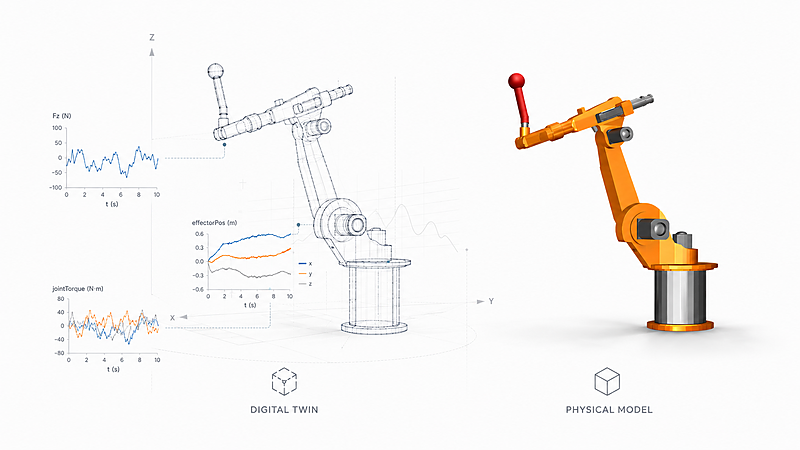
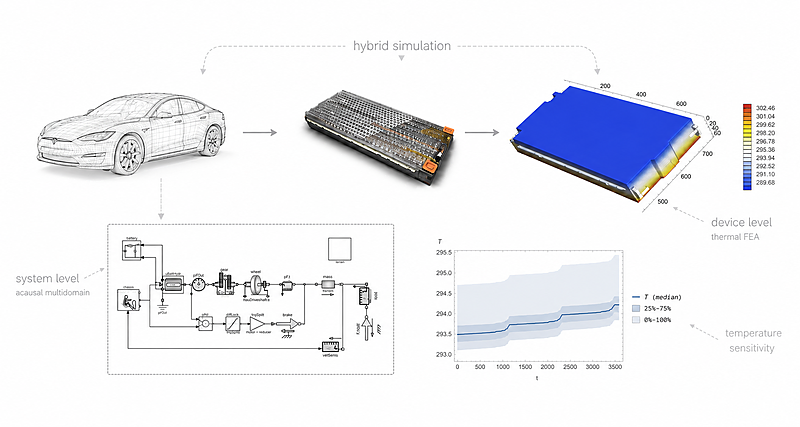
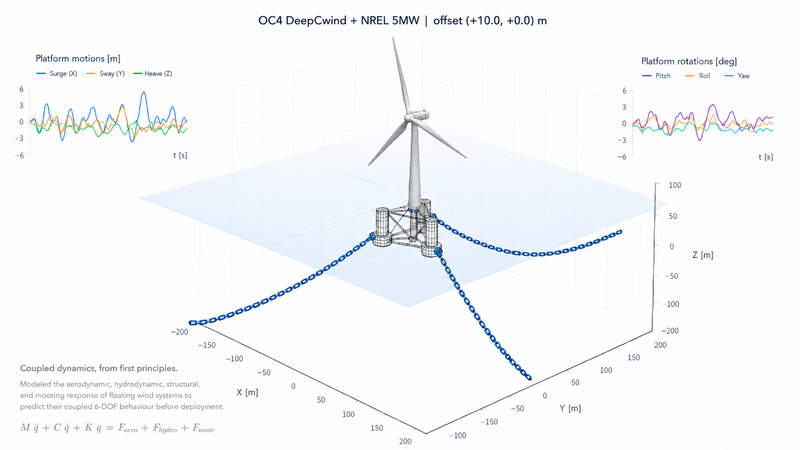
Wind turbine model Robotics and control system model Battery thermal model
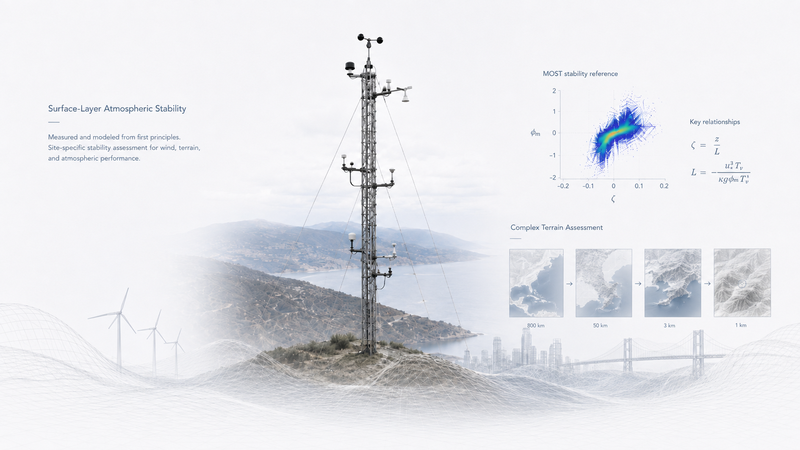
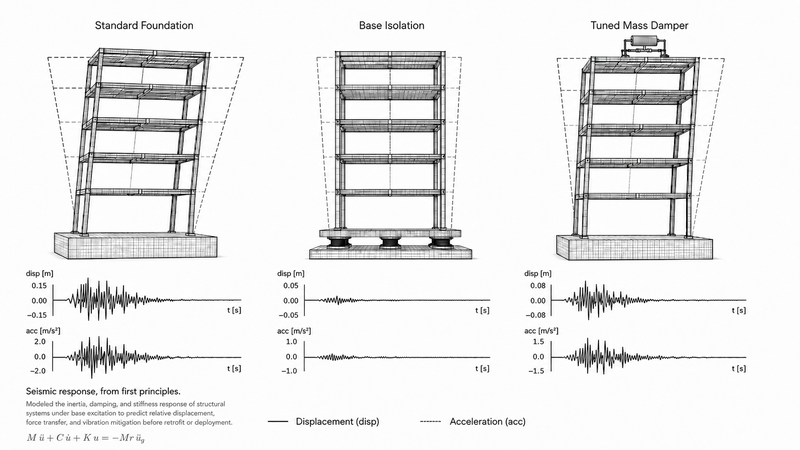
Atmospheric stability model Structural building model

Talk to an Expert Read the writings


Industries

Where we contribute most

Control Systems — keep systems stable under disturbance, from classical frequency-domain design to H∞, adaptive, and learning-based control
Energy — get more out of batteries and turbines (state estimation, storage, power flow)
Oil & Gas — catch mechanical failure before it happens (ESP, mooring, riser mechanics)
Dynamic Systems — model how systems evolve over time (nonlinear mechanics, fluid interactions, multi-body kinematics, rotating machinery, roll-to-roll systems)
Robotics — make autonomy reliable (manipulation, magnetic navigation, healthcare robotics)
Multidomain Modeling — one model instead of five disconnected ones (coupled physics, FMU export)
Agentic Frameworks — put simulation in front of anyone, not just engineers (LLM-driven tools)

Our Approach

Philosophy

Nous is Greek for the intellect that grasps first principles — the reasoning that cuts through chaos to the order underneath it. That's the method, not just the name: Nous Engineering & Research treats complexity as something to eliminate, not manage. A model that's actually right tends to look deceptively simple once it's finished — the redundant terms are the first thing to go. That standard holds whether the system is electrical, mechanical, thermal, or structural, because the underlying discipline is the same.

Read more →

Try It Yourself

Watch a model fit itself

Complexity comes apart one principle at a time — each point you add is another constraint the curve has to satisfy, and the shape underneath becomes something anyone can follow. Drop a few and watch it resolve, live.

Click anywhere on the plot to drop a point. The curve refits instantly.


Pick a System

One equation, three systems

Once fitted like the curve above, a circuit, a structure, and a thermal system don't look alike — until you write them as state-space. Flip through the tabs below and watch one equation drive all three:

u(t) R L C v_C i →

State: capacitor voltage v_C (V) and current i (A) — response to a 1 V step.

m k c x

State: displacement x (m) and velocity ẋ (m/s) — response to a 1 N step. Stiffer k → smaller steady-state x.

T_amb R C T

State: temperature T (°C), driven by heat flow through R — response to a 1°C ambient step.

Time (s)


Get Started

Have a system to model?

Tell us what you're working on — we'll tell you if we're a fit.

Talk to an expert